
Uncovering the role of cutaneous microbiota in the immunopathogenesis and therapeutic resistance of merkel cell carcinoma: a precision oncology perspec-tive
DOI:
 https://doi.org/10.33974/429km133
Keywords:
cutaneous microbiota, immune checkpoint inhibitors, Merkel cell carcinoma, Merkel cell polyomavirus, microRNA biomarkers, precision oncologyAbstract
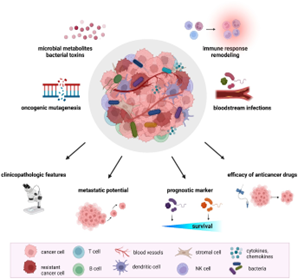
Merkel cell carcinoma (MCC) is a rare but highly aggressive cutaneous neuroendocrine malignancy predominantly affecting immunocompromised and elderly individuals. Driven by Merkel cell polyomavirus (MCPyV) in over 80% of Western cases and by ultraviolet (UV)-induced mutagenesis in the remainder, MCC presents significant clinical challenges due to propensity for rapid metastasis and resistance to conventional therapies. The cutaneous microbiota has recently emerged as a critical modulator of tumour immune microenvironment composition, antitumour surveillance, and responsiveness to immune checkpoint inhibitors (ICIs). This review synthesises current evidence on MCC epidemiology, viral oncogenesis, tumour microenvironment (TME) biology, and ICI therapy with evolving insights into host-microbiome interactions. We explore how microbial dysbiosis may potentiate immunopathogenesis and attenuate ICI efficacy, and we highlight translational opportunities including fecal microbiota transplantation (FMT), defined bacterial isolates, and bacterial consortia as microbiome-targeted adjuncts within a precision oncology framework.
Downloads
Downloads